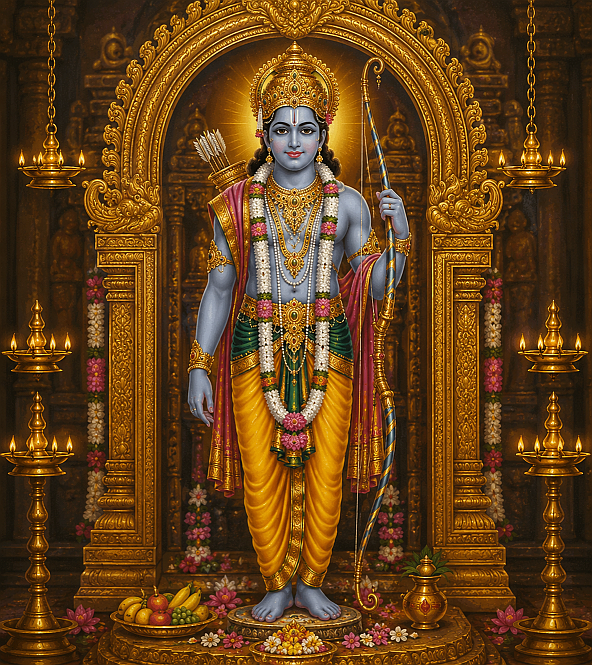
കീർത്തനം - അഭിരാമം യുവരാമം
|
അഭിരാമം യുവരാമം
രാഗം - മധ്യമാവതി
താളം - ത്രിപുട
കീർത്തനം
ദേവത - ശ്രീരാമൻ
രചന - പുത്തില്ലം മഹേഷ് നാരായണൻ
|  | Abhiramam yuvaramam
Raagam - Madhyamavathi
Thaalam - Tripuda
Keerthanam
Deity - Shri Ram
Lyrics - Puthillam Mahesh Narayanan
|
|ശ്ലോകം |
രാമായ രാമഭദ്രായ
രാമചന്ദ്രായ വേധസേ ।
രഘുനാഥായ നാഥായ
സീതായഃ പതയേ നമഃ ॥
|പല്ലവി|
അഭിരാമം യുവരാമം
രഘുവംശ പ്രിയ രാമം
ദശരഥ സുതം രാമം
ദേവ ദേവം പ്രനൗമി
|അനുപല്ലവി|
സഹസ്ര നാമ സ്തുതിക്കോ
സമമാം ശ്രീ രാമ മന്ത്രം
ജപിച്ചീടോ അഖിലോർക്കും
വരം ഏകു ശുഭദാ
|ചരണം-1|
ഹരേ രാമാ ജയാ രാമാ
രഘു രാമാ തൊഴുന്നേൻ
അയോദ്ധ്യാധിപാ നിന്നെ
ഇതാ വാഴ്ത്തി തൊഴുന്നേൻ
|ചരണം-2|
വാൽമീകി രചിതമാം
രാമഗാഥ ശ്രവിച്ചു
കൊണ്ട് ഇരിക്കും മാർ
ഓതി നാഥാ രാമചന്ദ്രാ പാഹിമാം
|ചരണം-3|
മുനി യാഗ രക്ഷകനാം
വൈദേഹി കാന്ത ദേവാ
ഗുഹനെ തോളോട് ചേർത്ത
അരവിന്ദ നയനാ
(ഹരേ രാമാ ജയാ രാമാ..)
|ചരണം-4|
കടലിനു മീഥേ ഓരോ
നട പാദ ചെയ്യ്ത നേരം
സ്നേഹമോടെ മൂന്നു വര
നൽകിയോനെ തൊഴുന്നേൻ
|ചരണം-5|
അയോധ്യാദ്ര പതി ആകും
രാമാ .....
അയോധ്യാദ്ര പതി ആകും
അഹല്യാ തൻ മുക്തി ഹേതോ
വിഭീഷണ നാഥാൻ ആയ
ദശ ഗ്രെവാന്തക രാമാ
(ഹരേ രാമാ ജയാ രാമാ..)
രാമാ .....
ലോകാഭി രാമാ ....
രാവണാ അന്തകാ രാമാ ...
സീതാ പത്തേ ... രാമാ
| |Shlokam|
Ramaya Ramabhadraya
Ramachandraya Vedhase |
Raghunathaya Nathaya
Sitayah Pataye Namah ||
|Pallavi|
Abhiramam Yuvaramam
Raghuvamsha Priya Ramam
Dasharatha Sutam Ramam
Deva Devam Pranaumi
|Anupallavi|
Sahasra Naama Sthuthikko
Samamaam Shree Rama Manthram
Japicheedo Akhilorkkum
Varam Eku Shubhadaa
|Charanam-1|
Hare Rama Jaya Rama
Raghu Rama Thozhunnen
Ayodhyaadhipaa Ninne
Itha Vaazhthi Thozhunnen
|Charanam-2|
Vaalmeeki Rachithamaam
Ramagaatha Shravichu
Kondirikkum Maar
Othi Naatha Ramachandra Paahimaam
|Charanam-3|
Muni Yaaga Rakshakanaam
Vaidehi Kaantha Deva
Guhane Tholodu Chertha
Aravinda Nayana
(Hare Rama Jaya Rama...)
|Charanam-4|
Kadalinu Meethe Ooro
Nada Paadha Cheytha Neram
Snehamode Moonnu Vara
Nalkiyone Thozhunnen
|Charanam-4|
Ayodhyaadra Pathi Aakum
Rama .....
Ayodhyaadra Pathi Aakum
Ahalya Than Mukthi Hetho
Vibheeshana Nathaalaaya
Dasha Grivaanthaka Rama
(Hare Rama Jaya Rama...)
Rama .....
Lokaabhi Rama ....
Raavana Anthaka Rama ...
Sita Pathe ... Rama
| |

| Singer : Bhadra K.M.P.
| Audio reference :
 |
Meaning
|
Summary : This prayer is a comprehensive chant of surrender to Lord Rama, weaving together his divine attributes, powerful mantra, and iconic milestones from the Ramayana.
(Shlokam & Pallavi): The hymn opens with the traditional Sanskrit verse bowing to Rama, the protector, the lord of the Raghu clan, and the husband of Sita. The Pallavi worships him as the ever-pleasing, youthful prince, the beloved of the Raghu dynasty, the son of Dasharatha, and the God of Gods.
(Anupallavi): The lyricist highlights the spiritual weight of the name "Rama," stating that chanting this single mantra is equal to reciting the entire Vishnu Sahasranama (Thousand Names). The Lord is requested to grant blessings and auspiciousness to everyone who repeats it.
(Charanams 1 & 2): The devotee bows to the King of Ayodhya, praising him as Hare Rama and Jaya Rama. It notes that those who continuously listen to the sacred Ramayana composed by Sage Valmiki find themselves calling out, "O Lord Ramachandra, protect me!"
(Charanams 3 & 4): Rama is celebrated for his deep relationships and mercy:
He is the protector of the sages' sacrifices (muni yaaga rakshakan) and the husband of Sita (Vaidehi).
He is the lotus-eyed Lord who broke caste barriers by embracing the boatman Guha as an equal (Guhane tholodu chertha).
It beautifully refers to the bridge built over the ocean (Sethu Bandhanam), referencing the folklore of Rama lovingly stroking the squirrel that helped move pebbles, giving it its three signature stripes (moonnu vara nalkiyone).
(Charanam 5 & Conclusion): The song culminates by praising the King of Ayodhya as the one who granted salvation (mukthi) to Ahalya by turning her back from stone to human, the savior and Lord of Vibheeshana, and the slayer of the ten-headed demon Ravana (Dashagriva-anthaka). It closes with ecstatic, repeating chants to the Lord of the Universe and the husband of Sita.
Line-by-line meaning of the song will be added in due course.
|