കീർത്തനം-കാമിത വരദം വാമനവപുഷം
|
കാമിത വരദം വാമനവപുഷം
രാഗം - ആനന്ദഭൈരവി
താളം – ആദി
കീർത്തനം
ദേവത - വാമനൻ
രചന - കൈപ്പള്ളി കേശവൻ നമ്പൂതിരി
|  | Kaamitha varadham vaamana vapusham
Ragam - Aanandabhairavi
Thaalam - Aadi
Keerthanam
Deity - Vamanan
Lyrics - Kaipalli Keshava Namboothiri
|
|ശ്ലോകം|
കോമളാംഗമമരേന്ദ്രവന്ദിതപദം മനോജ്ഞ മുഖമണ്ഡലം
ബ്രഹ്മചര്യപരിശോഭിതം ഭുവനസുന്ദരം ധൃത കമണ്ഡലും
ബാല ഭാവ കൃത സൗഭഗം ഭുവി സമാഗതം പരമമച്യുതം
ഭാവയേമഹിത വിക്രമം കപട വാമനം ബലിഗൃഹേ സ്ഥിതം
|പല്ലവി|
കാമിത വരദം വാമനവപുഷം
സാമരവിധി നമിതം, മുരാരിം, ഭാവയ ഹൃദയഹരിം
|അനുപല്ലവി|
കോമളവദനം താരകനയനം
യാചനമയ നടനം, മുരാരിം, ഭാവയഹൃദയഹരിം
(കാമിത വരദം...)
|ചരണം–1|
യാഗഗൃഹേ ബലിമധിഗതവാ൯ സക-
ലാ ഗമമൂർത്തി രഹോ, മുരാരിം, ഭാവയഹൃദയ ഹരിം
ഭൂതലമംബര മപി ഹൃതവാ൯ ഭജ
മാനസ തംശിവദം, മുരാരിം, ഭാവയഹൃദയഹരിം
(കാമിത വരദം...)
|ചരണം-2|
ബാഹ്യബലേ നിരതോ ബലിരമുനാ
ബ്രഹ്മണിചരതിസദാ, മുരാരിം, ഭാവയഹൃദയഹരിം
വാമനമച്യുത മത്ഭുതവിക്രമ-
മാത്മനികലയ ഭവാ൯, മുരാരിം, ഭാവയഹൃദയഹരിം
(കാമിത വരദം...)
| |Shlokam|
Komalangamamarendravandithapadam manojna mukhamandalam
Brahmacharyaparishodhitham bhuvanasundaram dhrutha kamandalum
Baala bhaava krutha saubhagam bhuvi samaagatham paramamachyutham
Bhaavayemahitha vikramam kapada vaamanam baligruhe sthitham
|Pallavi|
Kaamitha varadam vaamanavapusham
Saamaravidhi namitham, muraarim, bhaavaya hrudayaharim
|Anupallavi|
Komalavadanam thaarakanayanam
Yaachanamaya natanam, muraarim, bhaavaya hrudayaharim
(Kaamitha varadam...)
|Charanam - 1|
Yaagagruhe balimadhigathavaan sa-
laagamamoorthi raho, muraarim, bhaavaya hrudayaharim
Bhoothalamambara mapi hruthavaan bhaja
Maanasa thamshivadam, muraarim, bhaavaya hrudayaharim
(Kaamitha varadam...)
|Charanam - 2|
Baahrubalee niratho baliramunaa
Brahmani charathi sadaa, muraarim, bhaavaya hrudayaharim
Vaamanamachyutha manduthavikrama-
Maathmanikalaya bhavaan, muraarim, bhaavaya hrudayaharim
(Kaamitha varadam...)
| |

| Singer : Balakrishnan Madakkappillil
| Audio reference :
 |
Meaning
|
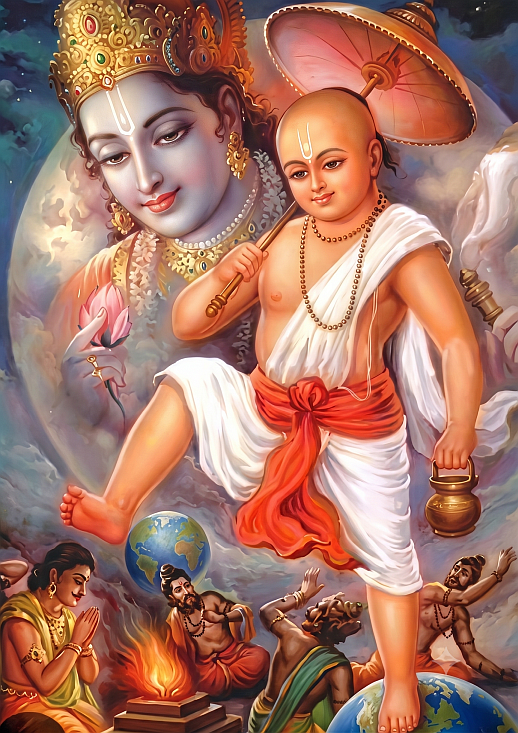
Summary : This devotional hymn glorifies Lord Vishnu's incarnation as Vamana, who approached King Mahabali's sacrificial hall in the deceptive guise of a radiant, celibate Brahmin boy. The song urges the human heart to meditate upon this enchanting divine form, whose sparkling eyes and gentle begging were actually a grand celestial play. By measuring the earth and heavens in giant strides, He stripped Mahabali of his worldly pride and external power. Ultimately, the hymn celebrates how the Lord blessed the king with absolute spiritual liberation, encouraging devotees to realize this wondrous, boon-giving divine presence within their own souls
Shlokam: I meditate upon Lord Vamana, the supreme, infallible one (Achyuta), who arrived on earth in the form of a beautiful young boy. He possesses a delicate, charming body and a captivating face, with feet revered by Indra (king of gods). Radiant in his celibate state (Brahmacharya) and holding a water pot (kamandalu), he resides disguisably at King Bali's sacrificial hall, celebrated for his glorious steps (vikrama).
Pallavi: Meditate in your heart upon Lord Murari (Vishnu), who steals the heart, assumes the form of Vamana, grants all desired boons, and is worshipped according to scriptural rites.
Anupallavi: Meditate upon Lord Murari, who has a tender, beautiful face, star-like sparkling eyes, and whose act of begging (asking for three paces of land) is like a graceful divine dance.
Charanam 1: Meditate upon Lord Murari, the embodiment of sacred scriptures who mysteriously approached King Bali at the sacrificial hall (yaagagruhe). Oh mind, worship the auspicious one who measured and took away both the earth and the heavens.
Charanam 2: Meditate upon Lord Murari, through whom the powerful King Bali was elevated to constantly dwell in the Supreme Ultimate (Brahma). Oh soul, hold within yourself Lord Vamana—the infallible, uniquely glorious, and wondrously valiant Lord.
|