അഷ്ടപദി-കഥിതസമയേപി ഹരിരഹഹ
|
കഥിതസമയേപി ഹരിരഹഹ
രാഗം - ആഹിരി
താളം - രൂപകം
അഷ്ടപദി-13
ദേവത - കൃഷ്ണൻ
രചന - കവി ജയദേവ
|  | Kathitha samayepi hari
Raagam - Aahiri
Thaalam - Rupaka
Asthapati-13
Deity - Krishna
Lyrics - Poet Jayadeva
|
|ശ്ലോകം|
അത്രാന്തരേ ച കുലടാകുലവർത്മഗാഥാ-
സംജാത പാതക ഇവ
സ്ഫുടലാഞ്ഛനശ്രീഃ ।
വൃന്ദാവനാന്തരമദീപയദംശുജാലൈ-
ർ ദിക്സുന്ദരീ വദന ചന്ദനബിന്ദുരിന്ദുഃ ॥
പ്രസരതി ശശധരബിംബേ വിഹിതവിലംബേ ച മാധവേ വിധുരാ ।
വിരചിത വിവിധ വിലാപം സാ പരിതാപം ചകാരോച്ചൈഃ ॥
|പല്ലവി|
കഥിതസമയേപി ഹരി രഹഹ നയ യൌ വനം |
മമ വിഫലമിദമമലരൂപമപി യൌവനം ||
|ധ്രുവപദം|
യാമി ഹേ കമിഹ ശരണം സഖീജന വചന വഞ്ചിതാഹം ||
|ചരണം-1|
യദനുഗമാനായ നിശി ഗഹനമപി ശീലിതം | തേന മമ ഹൃദയമിദമസമ-ശര-കീലിതം||
(യാമി ഹേ കമിഹ...)
|ചരണം-2|
മമ മരണമേവ വരമതി-വിതഥ-കേതനാ | കിമിതി വിഷഹാമിഹ വിരഹാനല-ചേതനാ||
(യാമി ഹേ കമിഹ...)
|ചരണം-3|
അഹഹ കലയാമി വലയാദി-മണി-ഭൂഷണം | ഹരി-വിരഹ-ദഹന-വഹനേന ബഹു-ദൂഷണം ||
(യാമി ഹേ കമിഹ...)
|ചരണം-4|
മാമിഹ വിധുരയതി മധുര-മധു-യാമിനി | കാപി ഹരിമനുഭവതി കൃത-സുകൃത-കാമിനീ ||
(യാമി ഹേ കമിഹ...)
|ചരണം-5|
കുസുമ-സുകുമാര-തനു ശര-ലീലയാ | സ്രഗപി ഹൃദി ഹന്തി മാമതിവിഷമ-ശീലയാ ||
(യാമി ഹേ കമിഹ...)
|ചരണം-6|
അഹമിഹ നിവസാമി യതി നവി ഗണിത-ചേതസാ | സ്മരതി മധുസൂദനോ മാമപി ന ചേതസാ ||
(യാമി ഹേ കമിഹ...)
|ചരണം-7|
ഹരി-ചരണ-ശരണ-ജയദേവ-കവി-ഭാരതി | വസതു ഹൃദി യുവതിരിവ കോമള-കലാവതീ ||
(യാമി ഹേ കമിഹ...)
| |Shlokam|
Athraanthare cha kulataa kula vartma gaathaa-
samjaatha paathaka iva sphuta laamchana shreeh |
vrindaavanaantharam adeepayath amshu jaalai-
rdhik sundaree vadhana chandhana bindhur indhuh ||
Prasarathi shashadhara bimbey vihitha vilambey cha maadhavey vidhuraa |
virachitha vividha vilaapam saa parithaapam chakaara ucchaih ||
|Pallavi|
Kathitha samayepi hari rahaha naya yau vanam |
Mama viphalamidamamalaroopamapi yauvanam ||
|Dhruvapada|
Yaami hey kamiha sharanam sakheejana vachana vanchithaaham ||
|Charanam-1|
Yadanugamaanaaya nishi gahanamapi sheelitham |
Thena mama hridayamidhamasamashara keelitham ||
(Yaami hey kamiha..)
|Charanam-2|
Mama maranameva varamathi vithatha kethanaa |
Kimithi vishahaamiha virahaanala chethanaa ||
(Yaami hey kamiha..)
|Charanam-3|
Ahaha kalayaami valayaadhi mani bhooshanam |
Hari viraha dahana vahaneina bahu dhooshanam ||
(Yaami hey kamiha..)
|Charanam-4|
Maamiha vidhurayathi madhura madhu yaamini |
Kaapi harimanubhavathi kritha sukritha kaamini ||
(Yaami hey kamiha..)
|Charanam-5|
Kusuma sukumaara hanu shara leelayaa |
Sragapi hridi hanthi maamathivishama sheelayaa ||
(Yaami hey kamiha..)
|Charanam-6|
AhamIha nivasaami yathi navi ganitha chethasaa |
Smarati madhusoodhano maamapi na chethasaa ||
(Yaami hey kamiha..)
|Charanam-7|
Hari charana sharana jayadeva kavi bhaarathi |
Vasathu hridi yuvathiriva komala kalaavathee ||
(Yaami hey kamiha..)
| |

| Singer : Sankaran Namboothiri
| Audio reference :
 |
Meaning
|
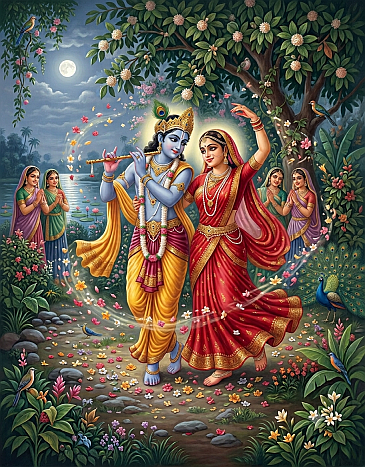
Summary : The 13th Ashtapadi ("Kathitha Samayepi") captures Radha’s intense grief and sense of abandonment as Krishna fails to show up at their promised meeting time. As the night deepens, her mind transitions through a wave of heavy emotions, moving from physical exhaustion and anxious longing to sharp pangs of jealousy. The piece is beautifully prefaced by the moonlit Sanskrit shlokam "Athraanthare cha..." to set a dramatic, melancholy atmosphere for her lamentation. Structured traditionally with a recurring Dhruvapada and eight distinct Charanams, it is rendered in deeply expressive ragas to highlight her profound yearning.
Shlokam: As night deepens and Krishna delays his arrival, the full moon rises like a beautiful sandalwood mark on the face of the directions (personified as beautiful maidens). However, the dark spot on the moon looks as if it has accumulated sin by acting as a guide for unchaste women sneaking out in the dark to meet their lovers. With the moonlight spreading across Vrindavan and Krishna nowhere in sight, Radha becomes deeply distressed and begins her intense, loud lamentation.
Pallavi: Radha cries out in grief, lamenting that Krishna has not come to the forest bower even though the promised time has passed. Without him, she feels her unblemished beauty and her youth are entirely useless and wasted.
Dhruvapada: Feeling completely deceived by the reassuring words of her friends who promised he would come, Radha asks in despair where she should go now and in whom she should seek refuge.
Charanam 1: Radha recalls how she braved the dense, terrifying jungle in the dead of night just to meet him. Yet, because he has abandoned her, her heart is now being ruthlessly pierced by the sharp arrows of Kamadeva (the god of love).
Charanam 2: Since her waiting place and expectations have become completely empty and futile, she feels death itself would be better. She questions why she should continue to live and endure the agonizing, scorching fire of separation burning through her consciousness.
Charanam 3: She looks at the jeweled ornaments and bracelets she put on to please him. In his absence, while carrying the burning fire of separation, these very decorations feel like a painful burden and an affliction to her body.
Charanam 4: This sweet, honeyed spring night only tortures and distresses her further. She imagines that somewhere out there, some other fortunate, merit-earning woman is blissfully enjoying the company of Krishna.
Charanam 5: Though her body is as delicate as a flower, love's playful arrows strike her with cruel intensity. Even the gentle flower garland resting on her chest feels like it is acting against its nature, striking and wounding her heart.
Charanam 6: She stays in the bower, her mind completely lost and numb to everything else around her. Yet, she laments that Krishna does not even spare a single thought for her in his heart.
Charanam 7: The stanza concludes with the poet Jayadeva praying that this eloquent, beautiful composition—written by a poet who seeks absolute refuge at the feet of Lord Hari—dwells forever in the hearts of the devotees, vibrant and elegant like a graceful young maiden well-versed in the fine arts.
|