കീർത്തനം-ഉച്ഛിഷ്ട ഗണപതെ.. ഊർജസ്വാലകൃതെ
|
ഉച്ഛിഷ്ട ഗണപതെ.. ഊർജസ്വാലകൃതെ
രാഗം - രേവഗുപ്തി
താളം – ആദി
കീർത്തനം
ദേവത - ഗണപതി
രചന -
|  | Ucchhishta Ganapathe
Ragam - രേവഗുപ്തി
Thaalam - Aadi
Keerthanam
Deity - Ganapathi
Lyrics -
|
|പല്ലവി|
ഉച്ഛിഷ്ട ഗണപതെ.. ഊർജസ്വാലകൃതേ
ഉത്തമ താപക സേവിത രക്ഷമാം
|അനുപല്ലവി|
സ്വച്ഛതരാം നയ ശേഖര മന്ദിര
വാരിത രിപുരിത ഭക്ത പുരന്ദര
|ചരണം-1|
നീലസാറൊരുഹ ദാഡി വിഭലവെടും
കലമാകുഞാവല സൂത്ര കരാംബുജ
കുന്ദര വാരിദ മേജഗ വീഥിദേ
വരണ വരണുത വാഞ്ചിത ദയകാ
(ഉച്ഛിഷ്ട ഗണപതെ)
| |Pallavi|
Uchhishta Ganapathe.. Oorjaswalakrithe
Uthama Thaapaka Sevitha Rakshamaam
|Anupallavi|
Swachhatharaam Naya Shekhara Mandira
Vaaritha Ripuritha Bhakta Purandara
|Charanam-1|
Neela Saaroruha Daadimi Phala Vedum
Kalamaaku Njaavala Soothra Karaambuja
Kundhara Vaaradha Me Jaga Veethidhe
Varana Varanutha Vaanchitha Daayaka
(Uchhishta Ganapathe...)
| |

| Singer : Unni Krishna Varrior
| Audio reference :
 |
Meaning
|
Summary : Pallavi & Anupallavi : A soulful plea to Uchhishta Ganapati—one of the 32 major tantric forms of Lord Ganesha, who is the embodiment of immense spiritual energy and vigor (Oorjaswala). The poet prays, "Oh Lord, who is worshipped by the greatest of ascetics, sages, and meditators (Uthama Thaapaka Sevitha), please protect me (Rakshamaam)." He is addressed as the divine protector residing in a pure, righteous mind, who completely dispels all inner and outer enemies (Vaaritha Ripu) and serves as a generous guardian to His devotees, much like Lord Indra (Purandara) is to the gods.
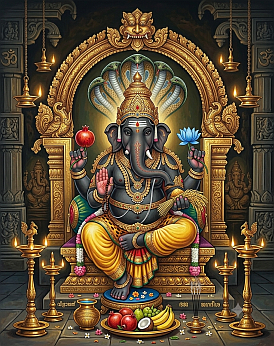
Charanam -1: This verse beautifully describes the specific iconography of Uchhishta Ganapati. He holds various symbolic objects in His lotus-like hands (Karaambuja), such as the blue lotus (Neela Saaroruha), a ripe pomegranate fruit (Daadimi Phala), paddy sheaves (Kalama), and a japa mala/holy thread (Soothra). The poet praises Him as the magnificent Lord who removes worldly darkness like rain clouds (Vaaradha), clears the paths of our life's journey (Jaga Veethidhe), and is praised by the best among sages for being the ultimate granter of all righteous desires (Vaanchitha Daayaka).
|